Ahmedabad-Dholera Expressway
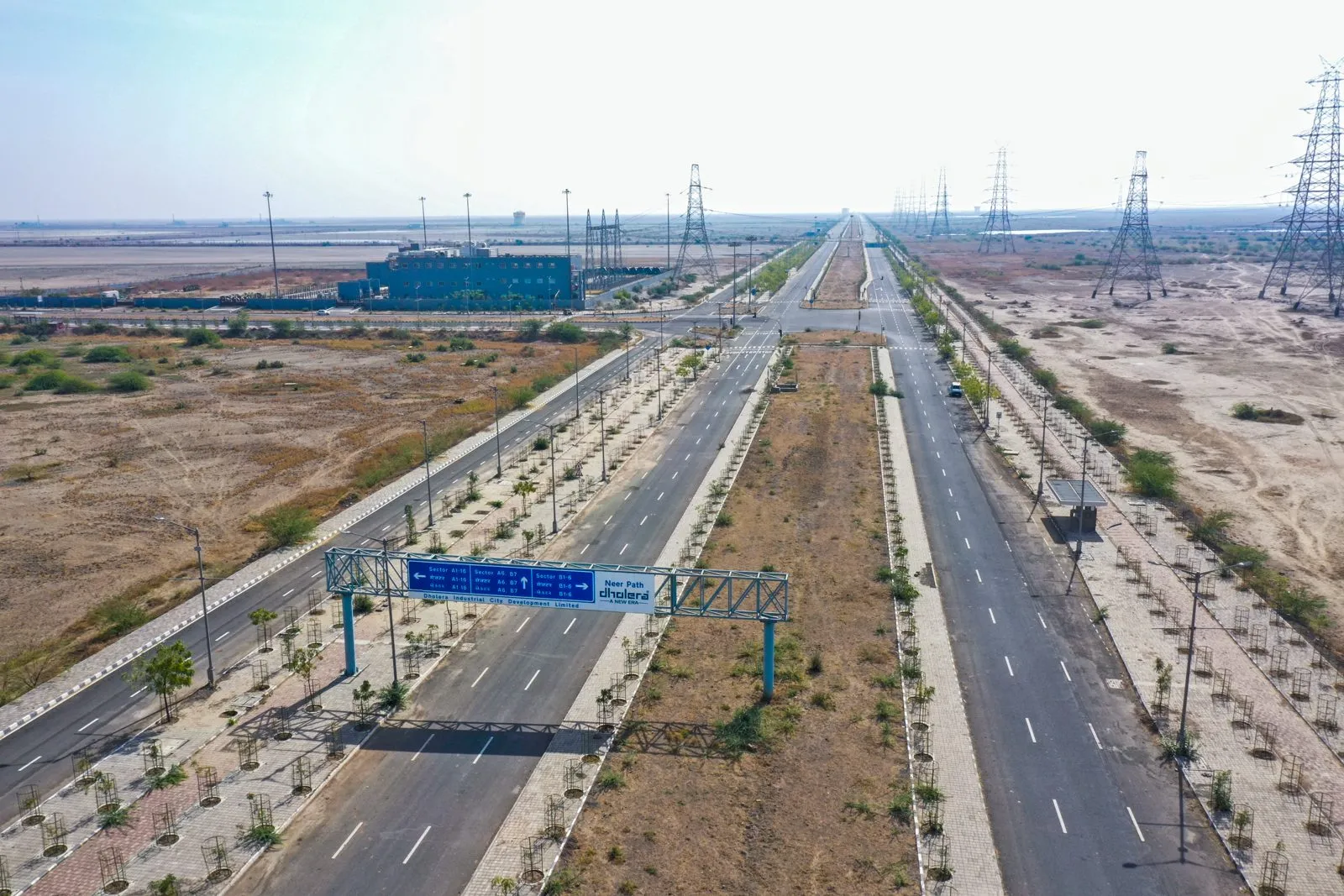
Cities are priced in minutes, not kilometres. Before March 2026, Dholera's problem was never distance (100 km is nothing by metro standards); it was the two-hour-plus state-highway crawl that made the region feel remote. An access-controlled expressway rewrites that sentence, which is why we treat the inauguration as the corridor's inflection point.
The facts on the asphalt
Four lanes, expandable to eight, design speed 120 km/h, greenfield alignment feeding the SIR and onward to the airport zone. Construction cost citations vary by scope: about Rs 3,196 cr construction-only versus about Rs 4,373 cr including land, and we quote both because sources conflict. Tolling via FASTag is the stated model; specific rates were not credibly published as of our last check, and any toll figure you see quoted deserves a source demand.
The corridor, in one picture
What it changes for a buyer
Site visits stopped being expeditions. You can now inspect plots, attend registrations and re-visit before decisions within a morning. Markets with easy inspection are markets where fraud gets harder, which quietly improves the whole ecosystem.
Interchange geography became the new location currency. Access-controlled roads concentrate value at their entry and exit points. "Near the expressway" means little; "X minutes from a usable interchange" means everything. Our shortlist briefs state interchange distance explicitly.
The labour and logistics case strengthened. The fab's construction workforce, future factory shifts and cargo movement all run on this spine, ahead of rail's 2030-31 target. Employment gravity is what ultimately urbanises land.
One caution
"Touching the expressway" is a brochure phrase, not a value driver; access-controlled roads by definition cannot be entered from adjacent plots. Value flows through interchanges and the service-road network. Ask the position question precisely, and check it on the ground or on our visit route.