Top Dholera Price Growth Drivers, Explained Honestly
Dholera plot prices are driven by a short list of factors: proximity to built infrastructure, TP scheme and Final Plot status, N.A. status, and nearness to the airport, expressway, central spine, and rail. This page explains the direction each driver pushes, never amounts, because appreciation is an expectation and not a guarantee.
Proximity to the Activation Area
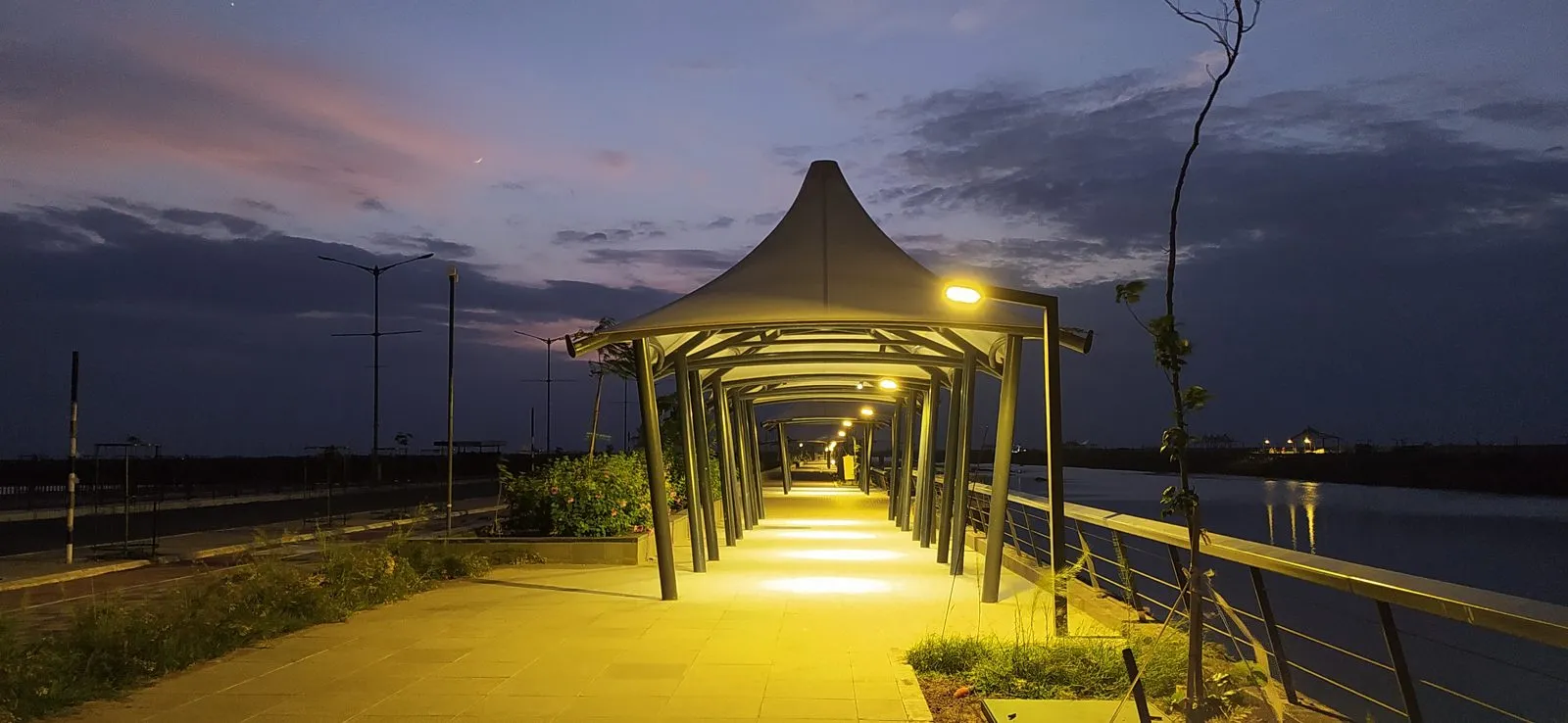
The most concrete driver is distance from infrastructure that already exists. The Activation Area, about 22.5 sq km inside TP scheme 2, has built trunk works: underground power and fibre, piped gas, potable and recycled water, a 50 MLD treatment plant, about 72 km of internal roads, and an operational command centre. A plot served by built infrastructure is a different product from a plot awaiting it, and quotes reflect that. This driver is the easiest to verify with your own eyes, which is exactly why it carries weight. Sellers can dispute forecasts. They cannot dispute a road you are standing on.
TP scheme status and the Final Plot number
Dholera develops through town planning schemes, and where a plot sits in that machinery moves its price. Six TP schemes are sanctioned, with Phase 1 covering TP1 and TP2, about 153 sq km together. A plot inside a sanctioned scheme with a clear Final Plot number is legally settled in a way that nearby unscheduled land is not, and buyers pay for that certainty. The master plan and TP schemes page explains the structure. When comparing two quotes, always ask which scheme and which Final Plot each sits on. Price differences often turn out to be status differences wearing a location costume.
N.A. status
Non-agricultural status determines what land can legally become, so it is a price driver at the most basic level. In Dholera, land inside a sanctioned TP scheme is treated as N.A. by Gujarat rule, which is one reason scheme status matters so much. Agricultural land outside that framework cannot honestly carry a developed-plot price, and a documented red flag pattern in this market is agricultural land priced as if it were N.A. When a quote looks surprisingly cheap, the explanation is usually here. The status is checkable through the 7/12 extract on AnyROR, and checking it converts a price mystery into a price fact.
Nearness to the airport
The airport pushes prices around it because it is Dholera's most visible connectivity anchor. The physical progress is real: a 3,200 metre Code 4E runway, a first AAI trial landing on 4 June 2026, and completion reported around 80 percent. Operations are targeted for September or October 2026, and that date is a target, not a certainty. The honest way to treat this driver is progress-weighted: each verified milestone strengthens it, while marketing that treats the airport as already open overstates it. The airport page tracks the current status. Nearness helps most when the underlying plot status is clean, and it rescues nothing when it is not.
The expressway and the central spine
Road connectivity is the driver that has already moved from promise to fact. The 109 km expressway was inaugurated on 31 March 2026, reported, putting Ahmedabad roughly 40 to 60 minutes away. Within the city, position relative to the central spine and the internal road network shapes how usable and reachable a plot is. Access is a compounding driver: it makes site visits easier, construction cheaper, and future occupancy more plausible, all of which feed demand. When a seller leads with connectivity, agree that it matters, then bring the conversation back to the plot's own status, because a highway helps every plot in the area equally.
Rail, anchors, and what drivers cannot do
Longer-clock drivers sit behind the current ones. The Rs 20,667 crore semi-high-speed rail line, about 134 km, was cleared on 13 May 2026 with a 2030-31 target. The confirmed Tata fab and the wider industrial pipeline drive expected jobs, and jobs drive land demand over time. But a driver is a direction, not a schedule and not a promise. Drivers can stall when timelines slip, and no combination of them guarantees appreciation on any specific plot. Prices also respond to plot-level facts no city driver can fix: papers, status, and access. The price trends page covers how to read quotes against these drivers without turning direction into prophecy.
Questions buyers actually ask
Which price driver matters most in Dholera?
There is no official ranking, but proximity to built infrastructure is the most concrete, because the Activation Area's roads, power, and water exist and can be verified in person. Status drivers, a sanctioned TP scheme and N.A. treatment, matter just as much because they determine what the land legally is.
Do these drivers guarantee that prices will rise?
No. Drivers describe direction, not certainty. Appreciation is an expectation built on anchors and infrastructure, never a guarantee, and timelines can slip. A plot with weak papers loses value regardless of how strong the surrounding drivers look.
How much have Dholera prices actually grown?
Unknown, honestly. There is no verified public price series for Dholera plots, and growth figures quoted in marketing are not audited. Judge any quote against the drivers on this page and the plot's verified status rather than against a claimed growth number.