Dholera vs Sanand
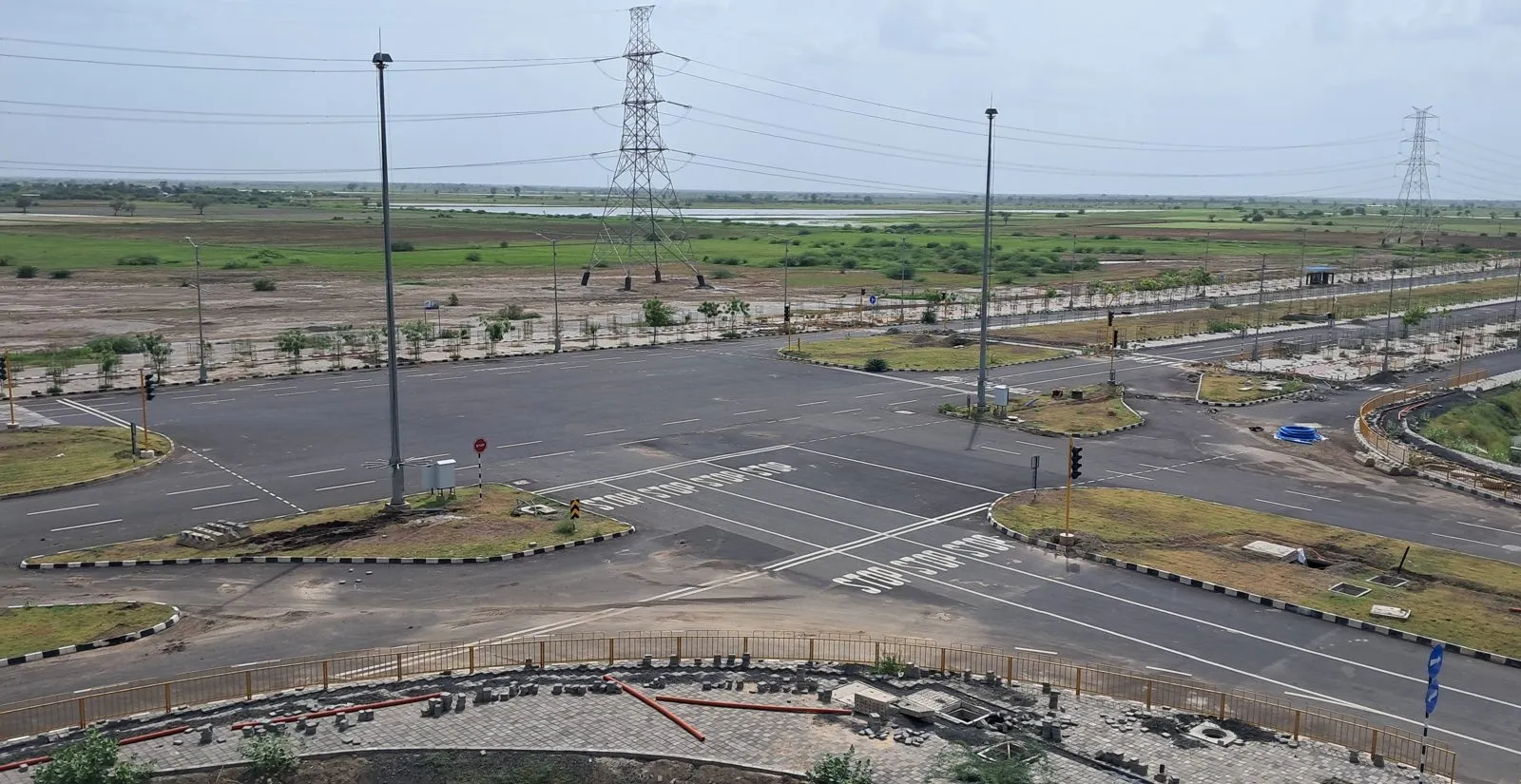
This is Gujarat's most local comparison and its most instructive one, because Sanand is the completed experiment: same state, same industrial-recruitment machine, same Tata-anchored beginning. Read it as Dholera's older sibling.
The Sanand story, compressed
When the Nano project relocated to Sanand in 2008, the area was farmland with a GIDC estate plan. The anchor arrived, suppliers followed, then more OEMs and electronics investment; land that traded in lakhs per bigha entered the crore conversation over the following decade, and today Sanand functions as Ahmedabad's industrial suburb: workers commute, factories run shifts, land is priced for certainty, not possibility. That is what a corridor looks like after the bet resolves.
The table that matters
| Question | Sanand | Dholera |
|---|---|---|
| Stage | Mature, operating | Infrastructure and anchors phase |
| Anchor | Auto and electronics, running | Semiconductor fab, under construction |
| Distance from Ahmedabad | ~20-30 km, urban continuity | ~100 km, expressway-linked |
| Land pricing | Certainty priced in | Uncertainty still discounted |
| Governance | Conventional (GIDC estates, municipal growth) | SIR Act, DSIRDA master plan, TP schemes |
| Upside shape | Steady, suburb-grade | Wide range, corridor-grade |
What Sanand proves and what it cannot
It proves the machine works: Gujarat's anchor-recruitment plus industrial-land playbook turned farmland into an economy within fifteen years, in living local memory. It cannot prove Dholera's speed or ceiling, because Dholera's variables are larger in both directions: a vastly bigger canvas, a more strategic anchor, more distance to cover and more infrastructure arriving by plan rather than accretion. A buyer wanting yesterday's proven outcome buys near Sanand at today's proven prices; a buyer underwriting the next edition buys Dholera with verification and patience. Same state, same playbook, different innings.