Jobs and population
Land value is deferred wages. People earn near where they work and pay to live near where they earn, so every land thesis is secretly an employment thesis. Dholera's runs like this.
The target, with its skeleton
The 800,000-plus figure is not a round guess; the sanctioned development plan assigns it sector by sector: electronics and emerging tech 87,300; pharma and bio 49,100; heavy engineering 45,100; auto and ancillaries 43,900; general manufacturing 42,400; agro and food 27,500; IT and ITES 6,200 in direct terms, with indirect employment scaling on top. Targets with published skeletons can be tracked, which is the only reason to respect them.
The jobs ladder, honestly labelled
The rungs that exist in 2026
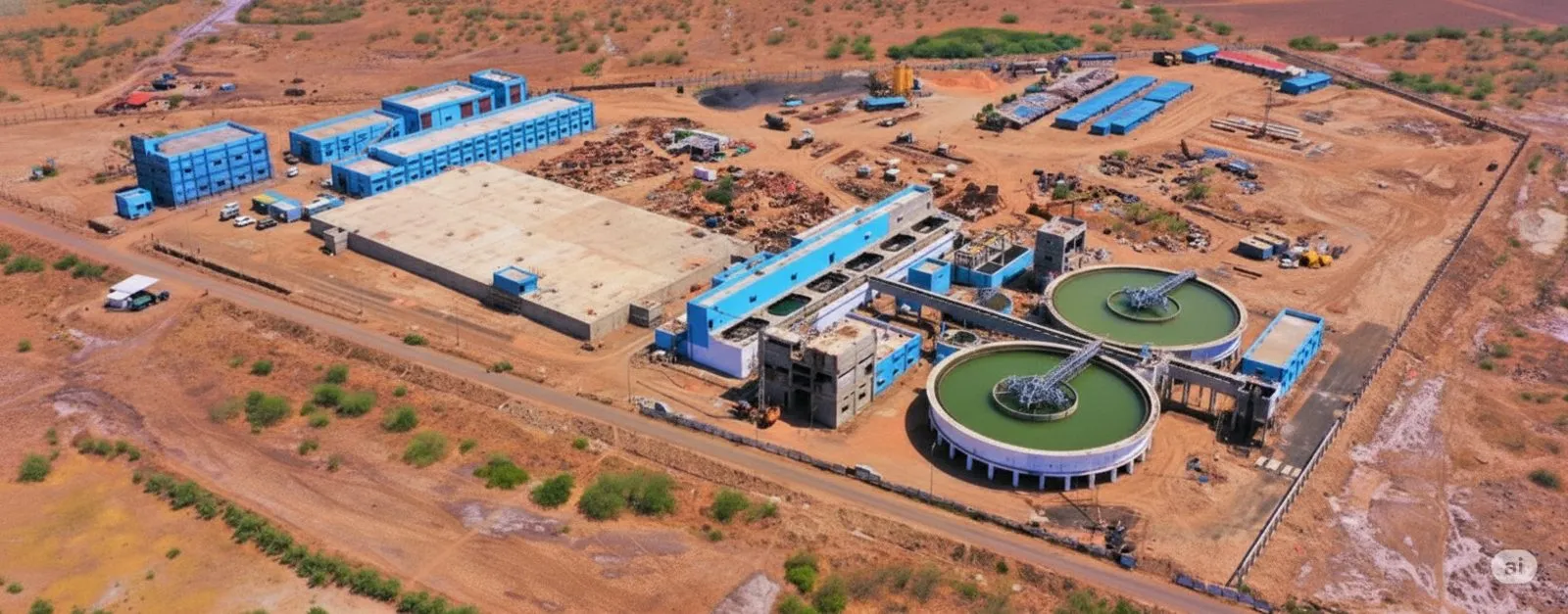
Rung one, construction: the fab site, trunk works, the airport and the expressway have made Dholera a significant construction-employment zone already; visible any weekday. Rung two, contracted operations: the fab's ~21,000-job SEZ framing, solar O&M, the coming data centre's build-out. Rung three, the recruitment flywheel: suppliers (Fujifilm-style materials plays), logistics, services. Each rung converts some workers into residents, and residents into the retail demand that later phases price in.
The honest baseline
Today's permanent population is thin: Dholera village recorded 2,779 people in the 2011 census, and the 2020-era activation targets for early population lapsed, which we print because slipped targets belong on the record. This is precisely what an infrastructure-first city looks like mid-build: jobs arrive as sites, then as shifts, then as families. Buyers who understand the ladder buy time on it; buyers who read the 800,000 as next year's census get disappointed on schedule.
The buyer translation
Match your horizon to a rung. Five-to-seven-year money is betting on rungs one and two maturing (fab operational, airport running, first residential absorption). Patient money can underwrite the full ladder. Money that needs rental yield in 2027 is at the wrong city, and we will say so in the first conversation.