Top Dholera Water and Power Facts: Plant, Canal, Cables and Solar
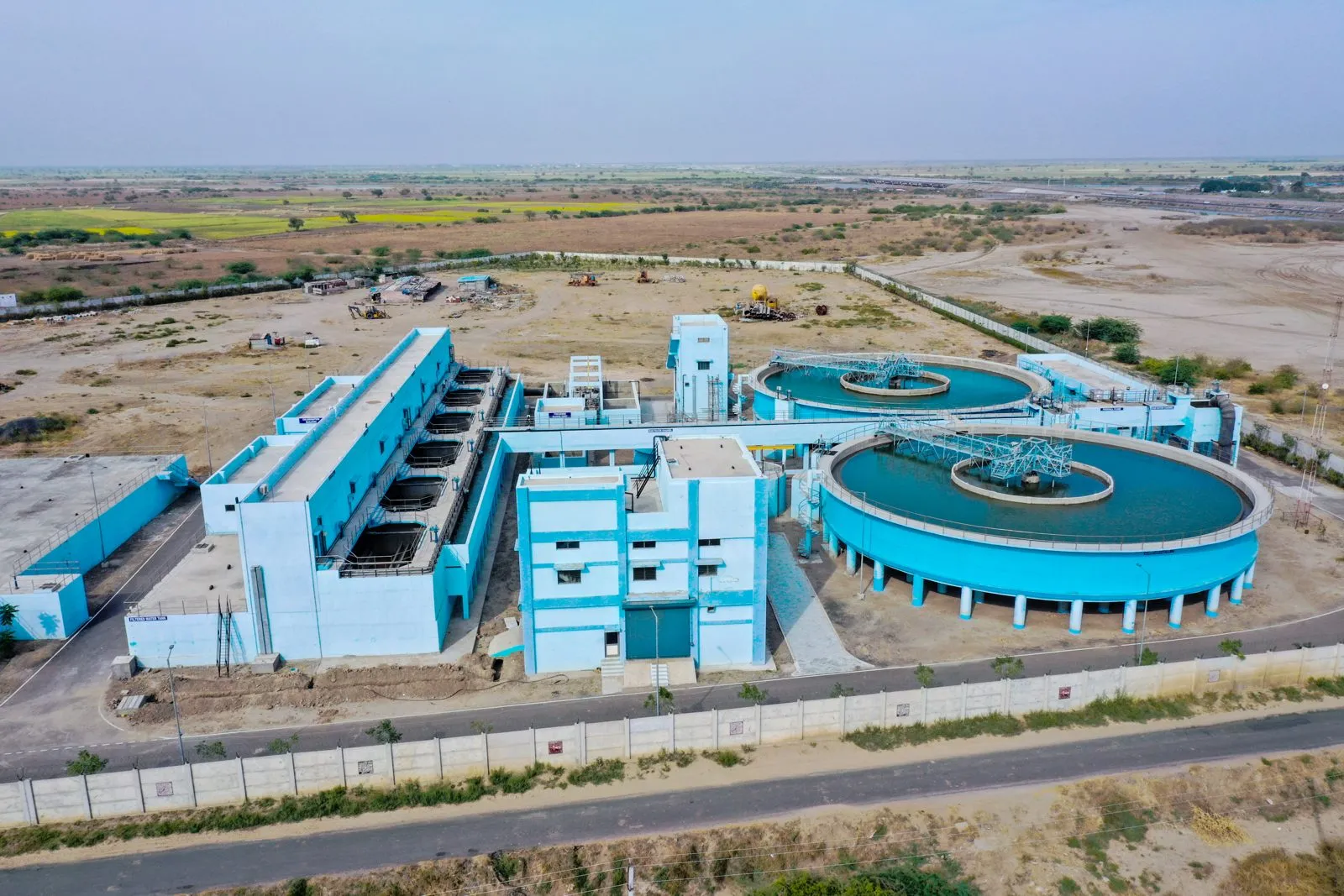
The 50 MLD water treatment plant
A 50 MLD water treatment plant serves the Activation Area, the roughly 22.5 sq km zone inside TP scheme 2 where trunk infrastructure is built.
MLD means million litres per day, and treatment capacity is one of the harder constraints on any industrial city. Semiconductor fabrication in particular is water intensive and quality sensitive, so treated supply is not a civic nicety here, it is a condition of the anchor industry operating at all.
The plant is built and part of the delivered trunk network, alongside underground power and fibre, piped gas, about 72 km of internal roads and the operational ICCC command centre in the ABCD building. That distinction matters when comparing Dholera to projects where utilities are described in future tense. See our Activation Area page.
Dual water lines: potable and recycled
The Activation Area carries potable and recycled water on separate lines. This is a design decision made once, at the trunk stage, and it cannot be added cheaply later.
A dual network means treated water can be returned for non drinking uses, industrial process needs, landscaping and flushing among them, rather than discharged after a single use. On a coastal Gujarat site, where fresh water availability is a real limit rather than a theoretical one, that changes how much industry a given supply can support.
It is also a useful test of how seriously a greenfield plan was engineered. Retrofitting a second pipe network into a built city is close to impossible, so the presence of one here says the water constraint was taken seriously before the first plot was sold. More systems in our smart city features guide.
The 6.5 km stormwater canal
A 6.5 km stormwater canal is built as part of the Activation Area trunk work.
Dholera sits on a flat coastal plain about 100 km south west of Ahmedabad. On flat ground near the sea, water does not drain away by gravity the way it does on a slope, and engineered drainage is the difference between land that is usable after monsoon rain and land that is not. This is one of the few pieces of infrastructure that directly affects whether a plot can be built on and occupied year round.
For a buyer, the practical instruction is to look at drainage on site rather than reading about it. Where does water go from this plot, and is there a built channel it can reach. Our site visit checklist includes the question.
Power: underground, and increasingly solar
Two facts define the power position.
Distribution. Power runs underground in the Activation Area, alongside fibre. That removes overhead lines from the streetscape permanently and makes the network more resilient in storms.
Generation. Around 300 MW of solar is commissioned. A 1,000 MW Phase 1 has been sanctioned, and the long range target is 5,000 MW.
Read those three solar numbers as three different things. Commissioned means generating today. Sanctioned means approved and funded to build. A long range target is a planning ambition that should not be counted in any present day assessment. Our solar park page keeps the stages separate, which is how the whole region is best read.
Why utilities decide the industrial case
Large industry chooses sites on power and water before it chooses on land price. Two commitments in Dholera show why.
The Tata Electronics fab, confirmed and under construction at Rs 91,000 crore, plans up to 50,000 wafers a month on 300 mm wafers, with commercial production reported for mid 2028. Fabs consume large volumes of treated water and demand extremely stable power.
The L and T with Vyoma AI data centre agreement is for Rs 25,000 crore and 250 MW, with operations targeted around 2028. A 250 MW load is a small city's worth of demand on its own, which is precisely why a nearby solar base at 300 MW commissioned and 1,000 MW sanctioned is part of the pitch rather than a side note. See the infrastructure guide.
What this means for a plot buyer
Utilities are the most reliable signal available in this market, because they are physical, dated and hard to exaggerate. A treatment plant either exists or it does not.
They also draw the boundary of what is actually served. The 50 MLD plant, the dual water lines, the canal and the underground cabling belong to the Activation Area, about 22.5 sq km inside a plan of roughly 920 sq km. A plot elsewhere in the SIR is not connected to them by association.
So ask two questions of any plot: which TP scheme is it in, and which built services reach it today. Then verify the project on gujrera.gujarat.gov.in and pull the title chain including a 30 year encumbrance certificate. Background on the wider plan sits on our Dholera explained page.
Questions buyers actually ask
Where does Dholera get its water?
The Activation Area is served by a 50 MLD water treatment plant, with potable and recycled water carried on separate distribution lines so treated water can be reused for non drinking purposes. Drainage is handled by a 6.5 km engineered stormwater canal. These are part of the built trunk network inside the roughly 22.5 sq km Activation Area, not across the whole 920 sq km plan.
How much solar power does Dholera have?
Around 300 MW is commissioned. A 1,000 MW Phase 1 has been sanctioned, and the long range target is 5,000 MW. Those are three different stages: generating now, approved and funded, and a planning ambition. Separately, the L and T with Vyoma AI data centre agreement covers 250 MW of demand with operations targeted around 2028.
Is power supply in Dholera underground?
Yes, in the Activation Area. Power and fibre optic cabling both run underground there as part of the built trunk network, which also includes piped gas, potable and recycled water lines, about 72 km of internal roads and the 6.5 km stormwater canal. Underground distribution has to be decided before construction, since retrofitting it into a built city is prohibitively expensive.